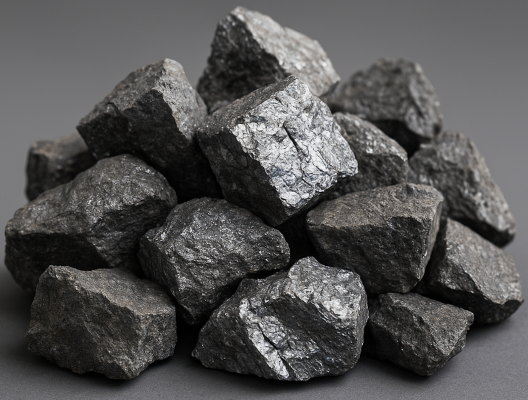
Gabon has taken a major step in its industrial policy through a partnership with Japan’s Asian Minerals Limited to build a manganese-processing facility expected to produce 400,000 metric tons annually by 2029, according to Journal du Gabon, an online news outlet focused on Gabonese affairs. The project coincides with the government’s decision to ban exports of unprocessed manganese starting that same year, part of a broader effort to retain value domestically and diversify its economy beyond raw commodity exports, particularly oil.
Strategic importance of manganese
Manganese plays a critical role in steel production, where it is used to make ferromanganese and silicomanganese alloys that strengthen and refine metal. Metallurgists often note that without manganese, there would be no steel, as the element is essential for removing impurities and improving structural integrity during production.
Gabon currently ranks as the world’s second-largest producer of manganese ore — the raw mineral from which industrial manganese is extracted and refined. The government’s policy aims to shift Gabon’s role from a supplier of unprocessed ore to a producer of higher-value alloys and metals, creating new opportunities for private investors and local enterprises in logistics, energy, and supporting industries such as transport, maintenance, and technical training. Gabon’s current industrial strategy marks a shift from traditional state-led development models toward a framework that prioritizes private-sector participation and regulatory facilitation.
The export ban has already triggered operational adjustments in Gabon’s mining sector. French mining group Eramet, which operates through its Comilog subsidiary, appointed a new executive in August to oversee its transition toward local processing, Reuters reported. While Comilog already refines part of its production domestically, the new policy will require more investment in smelting capacity and energy infrastructure.
South Africa remains the global leader in manganese ore and alloy production, supported by mature infrastructure and a deep technical base. Gabon, however, offers a new market for investors looking to operate in a lower-cost, high-grade resource environment where industrial capacity is still being built.
Financial reform and domestic integration
Gabon has introduced a “Gabonization” policy requiring that bank director positions be held by Gabonese nationals, a move aimed at strengthening local oversight of credit allocation, according to Écomatin, a financial newspaper covering Central African markets. The policy could support the government’s industrial objectives by expanding financing for domestic enterprises that supply goods and services to industrial projects.
Long-term outlook and inclusive growth
Demand for battery-grade manganese, a highly refined form used in electric vehicle and energy storage batteries, continues to rise as manufacturers seek to secure low-carbon supply chains, according to an International Energy Agency report. Gabon’s deposits, among the world’s highest in manganese purity, provide an advantageous base for future refining and chemical processing capacity.
The key determinant of success will be whether Gabon can foster an equitable investment environment rooted in environmental, social, and governance principles. Strong ESG practices, including fair labor standards, environmental safeguards, and transparent governance remain essential for reducing inequality and ensuring that growth benefits are widely distributed. For investors, making viable, ethical investments that strengthen Africa’s industrial base requires a critical understanding of these structural conditions.